
You know that sinking feeling when you open the fridge at 6pm on a Wednesday, stare at random ingredients, and end up ordering $45 worth of Thai food instead? Or when you throw out yet another bag of wilted spinach that you bought with the best intentions but never used?
You’re not alone. The average Australian household wastes $3,800 worth of food annually, and impulse grocery purchases add another $2,000 to that figure. That’s nearly $6,000 flying out the window each year because of poor planning.
But here’s the game changer: families who meal plan consistently save between $80-120 per week on groceries and food waste combined. That’s potentially $6,000 back in your pocket annually, plus the sanity that comes from never again standing in your kitchen at dinner time wondering what the hell to cook.
Ready to transform your kitchen chaos into a money saving, stress busting system that actually works with Australian lifestyles and budgets? Let’s turn you into a meal planning master.
The Australian Meal Planning Reality Check
Meal planning isn’t about becoming a perfect domestic goddess who has matching containers and Pinterest worthy prep sessions. It’s about creating a system that saves you money, time, and mental energy while working with real Australian family life.
Why Traditional Meal Planning Fails Aussie Families
Most meal planning advice comes from overseas and doesn’t account for Australian realities. Our grocery shopping patterns, seasonal produce cycles, and family schedules are different. Plus, many systems are designed for people with unlimited time and storage space.
The biggest mistake Australian families make is trying to plan every single meal in detail. This creates pressure, leads to food waste when plans change, and makes the whole system feel overwhelming. Smart meal planning is about creating flexible frameworks, not rigid menus.
The Money Saving Truth About Planning
When you meal plan strategically, you shop with purpose instead of wandering aisles hoping inspiration strikes. You buy ingredients that work across multiple meals, reducing waste and maximizing value. You avoid those expensive “emergency” trips to the supermarket that always result in buying more than you need.
Australian families who plan their meals spend an average of 25% less on groceries than those who shop spontaneously. They also order takeaway 60% less often because they always have a plan for dinner.

Strategic Meal Planning That Works with Australian Lifestyles
Forget complicated systems that require hours of prep. The most effective meal planning works with your real life, not against it.
The Australian Family Planning Framework
| Planning Style | Best For | Time Investment | Weekly Savings |
|---|---|---|---|
| Full Week Planning | Organized families, consistent schedules | 30 minutes weekly | $80-120 |
| 3-Day Rolling | Busy families, variable schedules | 15 minutes twice weekly | $60-90 |
| Theme Nights | Families with kids, routine lovers | 20 minutes weekly | $50-80 |
| Flexible Framework | Unpredictable schedules, beginners | 10 minutes weekly | $40-70 |
Choose the style that matches your family’s reality, not your aspirations. You can always upgrade your system once the basics become habit.
Building Your Meal Planning Foundation
Start with what you already cook well. List 10-15 meals your family enjoys and you can prepare without stress. These become your rotation foundation, ensuring you always have fallback options that work.
Consider your weekly rhythm. Monday might call for slow cooker meals if everyone’s tired from the weekend. Friday could be pizza night because nobody wants to cook elaborate meals before the weekend.
Account for Australian seasonal patterns. Summer planning focuses on fresh salads, BBQ options, and minimal cooking. Winter calls for hearty soups, slow cooked meals, and comfort food that can handle unpredictable weather.
Smart Shopping Integration for Maximum Savings
Your meal plan should drive your shopping list, not the other way around. This integration is where the real money saving magic happens.
The Catalogue Flip Strategy
Before finalizing your weekly meal plan, spend 10 minutes flipping through Coles and Woolworths catalogues (or checking their apps). Build your meal plan around what’s on special, especially proteins and seasonal produce.
If chicken thighs are half price, plan 2-3 chicken based meals for the week. If stone fruit is abundant and cheap, incorporate it into breakfast options, desserts, and snacks.
Create a “special ingredients” section in your meal planning notes where you track worthwhile items that are currently discounted but might not be next week.
Store Brand Integration
| Category | Store Brand Wins | Name Brand Worth It |
|---|---|---|
| Basics | Rice, pasta, canned tomatoes, flour | Premium spices, vanilla extract |
| Proteins | Frozen chicken, mince, eggs | Fresh fish, specialty cuts |
| Produce | Root vegetables, citrus, apples | Berries, herbs, exotic fruits |
| Pantry | Oils, vinegars, basic condiments | Specialty sauces, imported items |
Build meals around ingredients where generic brands excel. Your wallet will thank you, and often the quality difference is negligible or non-existent.
Bulk Buying That Makes Sense
Plan meals that can utilize bulk purchases effectively. If you’re buying a 5kg bag of rice, plan for fried rice, risotto, stuffed vegetables, and rice pudding across the month.
Consider shared bulk purchases with neighbors or family. Split that massive bag of potatoes or bulk pack of meat, then plan complementary meals that use similar ingredients.
Seasonal Australian Meal Planning Strategies
Australia’s distinct seasons offer different opportunities for savings and meal planning approaches.
Summer Planning (December-February)
Summer meal planning focuses on minimal cooking, fresh ingredients, and entertaining friendly options. Plan cold salads, BBQ meals, and fresh fruit based desserts when stone fruits and berries are at their peak and cheapest.
| Summer Strategy | Money-Saving Tip | Example Meals |
|---|---|---|
| Minimal cooking | Reduce energy costs | Cold pasta salads, fresh spring rolls |
| Peak produce | Buy seasonal in bulk | Stone fruit crumbles, berry smoothies |
| BBQ integration | Cook once, eat twice | Grilled vegetables for multiple meals |
| Hydrating foods | Reduce beverage costs | Cucumber salads, watermelon sides |
Plan for entertaining during summer holidays. Design meals that can easily scale up for guests without dramatically increasing costs per person.
Winter Planning (June-August)
Winter meal planning emphasizes warming comfort foods, longer cooking methods that tenderize cheaper cuts, and hearty meals that satisfy without requiring expensive ingredients.
Slow cooker and pressure cooker meals become your best friends. Cheaper cuts of meat transform into tender, flavorful dishes with minimal hands-on time.
Stock up on citrus fruits during peak season and plan meals that incorporate them for vitamin C and bright flavors during darker months.
Shoulder Season Flexibility
Autumn and spring require flexible planning as weather and produce availability can be unpredictable. Build adaptable meals that work whether it’s a warm day calling for salads or a cool evening perfect for soup.
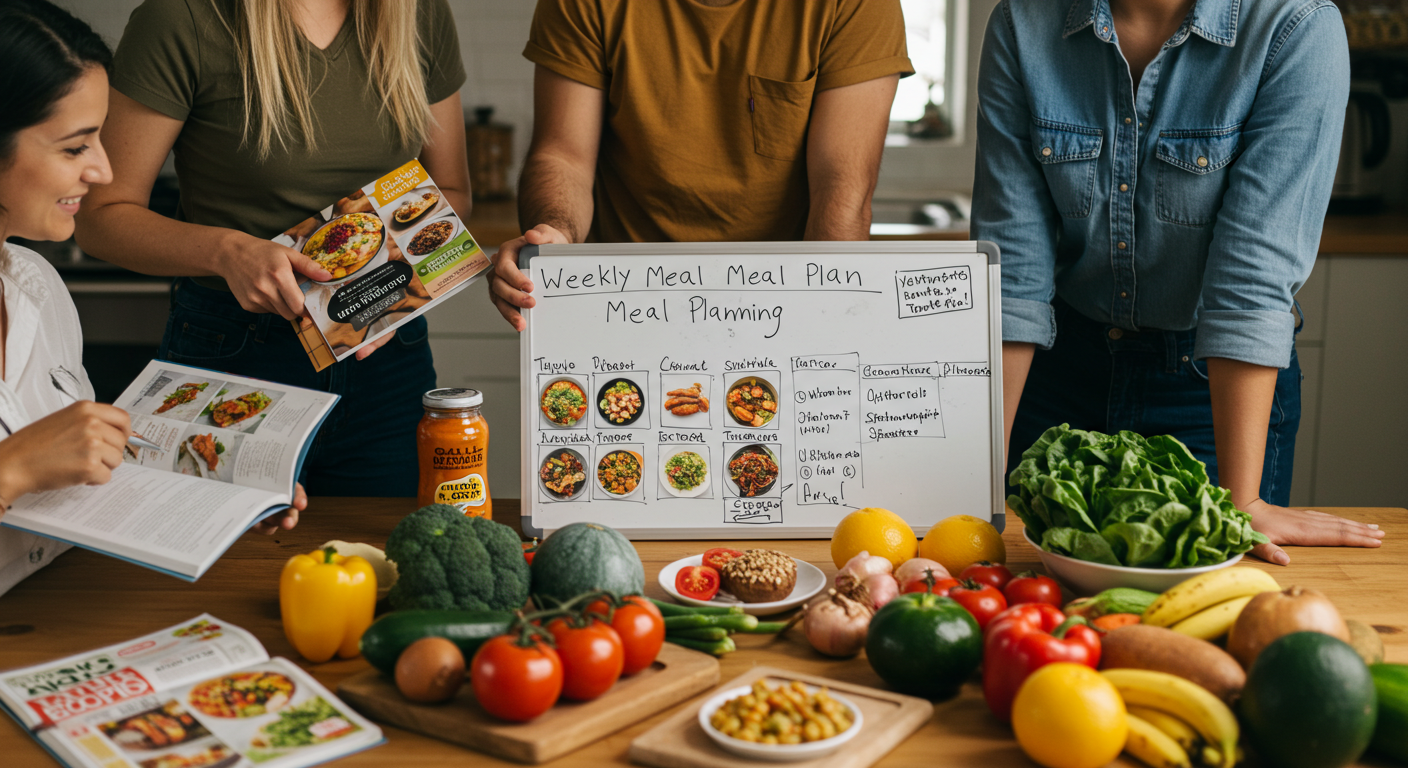
Budget Conscious Protein Planning
Protein typically represents the largest portion of your grocery budget, so strategic protein planning delivers the biggest savings impact.
The Australian Protein Hierarchy
| Protein Type | Cost Per Serve | Best Planning Strategy |
|---|---|---|
| Legumes/beans | $0.50-1.00 | Plan 2-3 vegetarian meals weekly |
| Eggs | $1.00-1.50 | Breakfast rotation, quick dinners |
| Chicken (whole) | $2.00-3.00 | Roast Sunday, use throughout week |
| Mince (bulk) | $2.50-3.50 | Batch cook, freeze portions |
| Fish (seasonal) | $3.00-5.00 | Plan around sales and seasons |
| Premium cuts | $6.00+ | Special occasions only |
Plan your protein hierarchy across the week. Maybe Sunday features a roast chicken that provides meat for Monday’s sandwiches, Tuesday’s curry, and Wednesday’s soup made from the bones.
Stretching Expensive Proteins
When you do buy premium proteins, plan meals that stretch them effectively. A small amount of prawns can flavor a large pasta dish. Quality bacon can enhance multiple meals when used as a flavoring agent rather than the main event.
Incorporate protein rich vegetables and grains to make smaller portions of meat feel satisfying. Lentils mixed with mince, beans added to chicken dishes, and quinoa in salads all boost protein while reducing costs.
Waste Busting Meal Planning Techniques
Food waste is expensive waste. Strategic meal planning can eliminate most food waste while maximizing the value of every ingredient you buy.
The Ingredient Crossover Method
Plan meals that share common ingredients across the week. If you’re buying fresh herbs for one dish, plan 2-3 other meals that use the same herbs.
| Base Ingredient | Meal 1 | Meal 2 | Meal 3 | Storage Tip |
|---|---|---|---|---|
| Fresh coriander | Monday tacos | Wednesday curry | Friday salad | Freeze in ice cubes |
| Coconut milk | Sunday curry | Tuesday smoothies | Thursday soup | Canned keeps well |
| Bell peppers | Monday stir-fry | Wednesday stuffed peppers | Friday omelet | Freeze chopped portions |
This approach ensures nothing gets forgotten in the crisper drawer and every ingredient earns its keep.
Planned Leftover Integration
Design meals that create useful leftovers rather than hoping you’ll figure out what to do with extras later. Sunday’s roast becomes Monday’s sandwiches by design, not accident.
Cook grains and proteins in larger batches than needed for one meal. That extra rice becomes fried rice later in the week. Extra roasted vegetables transform into frittata or grain bowl toppings.
Use By Date Awareness
When meal planning, consider the use by dates of ingredients you’re buying. Plan to use the most perishable items first and save shelf stable ingredients for later in the week.
Build flexibility into your plans for using up items that are approaching their use by dates. Keep a mental list of “rescue meals” that can incorporate various vegetables or proteins that need to be used quickly.

Family Friendly Planning That Reduces Food Battles
Meal planning with families requires balancing adult preferences, kids’ tastes, dietary restrictions, and budget constraints without losing your sanity.
The Family Input System
Hold a weekly 10-minute family meeting where everyone contributes meal ideas. Kids are more likely to eat meals they helped choose, and partners feel more invested in the planning process.
Create a “family favorites” list that everyone agrees on. These become your go to meals when planning feels overwhelming or when you need guaranteed crowd pleasers.
Build in flexibility for picky eaters without creating extra work. Plan meals with components that can be separated or customized easily.
Kid Friendly Budget Strategies
| Strategy | Implementation | Savings Impact |
|---|---|---|
| Hidden vegetables | Grate into sauces, blend into smoothies | Reduces supplement needs |
| DIY snacks | Plan homemade versions of packaged snacks | 60-70% cost reduction |
| Lunch box planning | Coordinate with dinner prep | Reduces packaged lunch items |
| Cooking involvement | Kids cook simple components | Increases acceptance, reduces waste |
Plan kid friendly meals that adults will also enjoy, rather than cooking separate meals that increase costs and complexity.
Managing Dietary Restrictions
When family members have dietary restrictions, plan meals that can be easily adapted rather than cooking completely separate dishes.
Create a base meal that works for everyone, then add restricted ingredients separately. For example, plan a stir-fry base that can accommodate gluten free, dairy free, or vegetarian needs with simple modifications.
Time Saving Prep and Batch Cooking Integration
Effective meal planning includes considering when and how you’ll actually prepare the food, not just what you’ll eat.
The Australian Prep Schedule
Most Australian families find Sunday afternoon or evening works best for meal prep, but adjust this to your family’s rhythm. Some prefer Thursday evening prep for the busy end of the week.
Focus prep time on components that save the most time during busy weeknights. Pre-chopped vegetables, cooked grains, and marinated proteins can transform a 45-minute dinner into a 15-minute assembly job.
Batch Cooking That Actually Works
| Batch Item | Prep Time | Meals It Enables | Storage Method |
|---|---|---|---|
| Cooked grains | 30 minutes | 4-5 meals | Fridge 5 days, freezer 3 months |
| Roasted vegetables | 45 minutes | 3-4 meals | Fridge 4 days |
| Protein portions | 60 minutes | 6-8 meals | Freezer 3 months |
| Sauce bases | 30 minutes | 4-6 meals | Freezer 6 months |
Don’t try to batch everything at once. Start with one category and build your system gradually.
Smart Storage Solutions
Invest in quality storage containers that stack well and are microwave safe. Poor storage turns good intentions into expensive waste.
Label everything with contents and dates. Future you will thank present you when you’re staring at mysterious containers wondering what’s inside.
Plan your fridge and freezer organization around your meal plan. Keep frequently used items accessible and group similar items together.
Technology and Tools for Australian Meal Planning
The right tools can make meal planning effortless, but don’t get caught up in complicated systems that require more maintenance than they provide value.
Digital Planning Tools
| Tool Type | Best Options | Key Features |
|---|---|---|
| Meal planning apps | Mealime, PlateJoy, Plan to Eat | Recipe integration, shopping lists |
| Shopping apps | Coles, Woolworths, Frugl | Price comparison, catalogue specials |
| Recipe organization | Paprika, BigOven | Scale recipes, nutritional info |
| Family coordination | Cozi, Google Calendar | Shared planning, schedule integration |
Choose tools that integrate with how your family already operates rather than forcing new systems that won’t stick.
Simple Planning Templates
Sometimes the simplest approaches work best. A basic weekly template on your fridge can be more effective than elaborate digital systems if you’re more likely to actually use it.
Create templates that include space for breakfast, lunch, dinner, and snacks. Add sections for “use up this week” items and shopping list notes.
Australian Resource Integration
Use local resources like seasonal produce guides, supermarket catalogues, and regional cooking websites to inform your planning. Australian specific recipe sources understand our ingredients, seasons, and family eating patterns better than international options.
Troubleshooting Common Meal Planning Failures
Even the most well intentioned meal planning can go sideways. Here’s how to recover quickly and prevent common pitfalls.
When Plans Go Wrong
Life happens. Kids get sick, work runs late, or you simply don’t feel like cooking what you planned. Build flexibility into your system rather than treating your meal plan as an inflexible contract.
Keep a list of “emergency meals” that can be made from pantry staples or frozen ingredients. These backup options prevent expensive takeaway orders when your planned meal doesn’t work out.
Avoiding Planning Burnout
Don’t try to plan elaborate meals every night. Mix simple assembly meals (pasta with store bought sauce and bagged salad) with more complex cooking projects.
Rotate planning responsibility if you have a partner. Take turns being the weekly meal planning leader to prevent one person from bearing all the mental load.
Seasonal Adjustment Strategies
Your meal planning approach should evolve with seasons, family schedules, and changing preferences. Summer plans don’t work in winter, and school term planning differs from holiday planning.
Regularly evaluate what’s working and what isn’t. Maybe monthly batch cooking sounded good in theory but doesn’t work with your actual schedule. Adjust rather than abandoning the whole system.
Your Meal Planning Action Plan
Ready to start saving serious money through strategic meal planning? Here’s your step by step implementation guide.
This week, start simple. Choose just 4-5 meals for the upcoming week, check what’s on special at your regular supermarket, and create a shopping list based on those planned meals. Time how long the planning takes and track how much you spend compared to a typical week.
This month, build your system gradually. Add one new element each week. Maybe week two you try the ingredient crossover method. Week three you experiment with batch prep. Week four you integrate seasonal produce planning.
Create your personal meal planning rhythm. Whether it’s Sunday afternoon with a coffee and the catalogues, or Wednesday evening planning for the weekend and following week, establish a routine that works with your actual schedule.
The average Australian family spends $200-300 per week on groceries and food. Strategic meal planning can reduce this by 25-40% while actually improving the variety and nutrition of what you eat. That’s $2,500-6,000 annually that could be going toward your mortgage, holidays, or savings instead of impulse purchases and food waste.
Your meal planning system should feel like a helpful tool, not another chore. Start with approaches that seem manageable, and gradually build complexity as the basics become automatic.
What’s your next step? This weekend, plan just three dinners for the coming week. Choose meals you know your family enjoys, check if any ingredients are on special, and create a focused shopping list. Notice how this focused approach changes both your shopping experience and your spending.
Small changes in planning create massive improvements in spending. Your future self will thank you for taking control of this weekly expense that represents one of your largest annual costs.